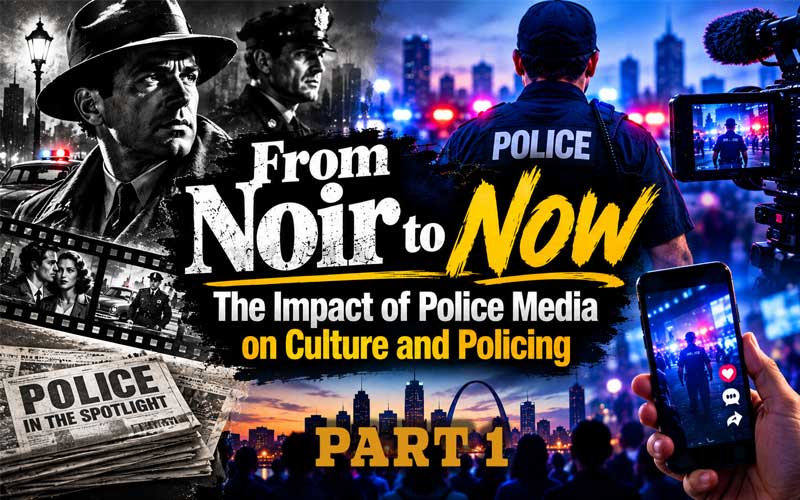
Podcast: Play in new window | Download
You now that we LOVE sage television programming. Whether it’s from television, feature films, streaming media or whatever else is offered, we love telling you what’s REAL, and what’s a bunch of Hollywood Hogwash.
Today, we welcome two specialists who not only have been cops themselves, but have harvested some of the BEST that television, movies and the internet have to offer across DECADES of entertainment history.
It’s time to take a detailed, comprehensive look at the media that impacts not just the worldwide audiences when it comes to policing, but what the people in law enforcement themselves think of it offcially.
Are YOU ready to learn more about the entertainment you take in when it comes to effective policing? Ready to learn more about the HUMANS behind the duty belt and badge?
It’s time for another episode of WhatCopsWatch on The 2GuysTalking Podcast Network.
The WhatCopsWatch Connection Links:
Connect with The Host (and View Direct Contact information Below!)



Subscribe to This Podcast & Listen Now!


Subscribe, Like, and Share Everywhere! Help Perspective Reviews Grow!

Rate this Podcast on iTunes!
The ultimate success for every podcaster – is FEEDBACK! Be sure to take just a few minutes to tell the hosts of this podcast what YOU think over at iTunes! It takes only a few minutes but helps the hosts of this program pave the way to future greatness!
Not an iTunes user? No problem! Be sure to check out any of the other many growing podcast directories online to find this and many other podcasts on The 2GuysTalking Podcast Network!
Links to Enjoy This Film!
It’s easy to have the same great experience from this film as we go! Hit the links below and get your copy of the film’s soundtrack, score or even the movie itself!


Housekeeping
— The Crisis Cop Podcast: Check it Out! https://CrisisCop.Com
— Calling All Future Role Players! Got a knack for acting and thinking on your feet? Train the future of Law Enforcement via Crisis Negotiation and Tell Us You’re Interested Today! https://BlueBaggersProject.Com
— WhatCopsWatch/2GuysTalking is Now an Official USCCA Business Partner!

— Free Field Training: Inside this episode we welcome Officer Tommy Mottl from Free Field Training on YouTube (and now, from The Free Field Training Podcast effort) to share his perspective on – literally – the area that he has intimate knowledge about in the South Chicagoland area…
Two Great Ways to Listen/Watch!
We are proud to provide you both a dedicated AUDIO and VIDEO presentation for this program!
To Listen Now: Hit the play button in the player on this page or hit the Subscribe button on your favorite Podcast Directory to instantly get these episodes when they release!
To Watch Now: Visit this program on YouTube, or hit the window located below to see the hosts, guests and light bulb moments that make this program special!
Timestamps for This Episode:
1. Introduction and Podcast Purpose
- Explanation of “What Cops Watch” and the collaborative Episode focus
- Introductions of hosts and guests, including their backgrounds in law enforcement, psychology, and crisis negotiation
- Acknowledgement of the importance of crisis negotiation skills and teamwork
2. Collecting and Analyzing Law Enforcement Media
- Discussion of guests’ shared interest in true crime history, media depictions, and police wellness
- Genesis and goals of their presentation for the Officer Safety and Wellness Conference
- Examination of how media depictions influence public perception of police and potential effects on officer wellness
- Use of an informal survey to gauge favorite and most accurate police shows and movies among officers
3. The “What Cops Watch” Concept in Practice
- The podcast’s practice of inviting law enforcement to share favorite movies, often unrelated to policing
- Story of contrasting expectations on police officers’ movie preferences vs. reality
- Reflection on how entertainment and real-life policing differ
4. Media’s Tone: Seriousness vs. Levity in Police Portrayals
- Observations on increasing negativity in depictions of law enforcement in recent years
- Assertion that television often omits the humor and lightheartedness within police culture, favoring tension and drama
5. Crime Genre Dominance in Media Consumption
- Statistical insights: 20% of films, 20-30% of TV programming are crime dramas
- Consideration of audience interest in crime stories and their impact on perceptions of policing
- Academic approach in criminal justice education: demystifying fictional portrayals in class
6. Decade-by-Decade Exploration of Police Portrayals
1940s & 1950s: The Birth of Police Procedurals
- The influence of film noir (e.g., The Maltese Falcon) and the emergence of the police procedural
- The role of shows like Dragnet and Adam-12 in shaping public perceptions
- Reference to L.A. Confidential (film) and video games (L.A. Noire) as touchstones for the era
- Discussion of LAPD’s involvement in guiding media and establishing professional image
- Examination of officers being role models, e.g., Jack Webb’s expectations of Adam-12 actors
- Emphasis on accountability, professionalism, and sanitized portrayals of policing ,
Influence and Limitations of Media in Early Decades
- Acknowledgement that sanitized, positive imagery influenced trust in police despite limited real-life interaction for many Americans
- Recognition that TV’s version often avoided “the good, bad, and ugly” for contemporary audiences
- Use of police procedurals as potential marketing tools for agencies (e.g., highlighting forensics advancements)
1960s & 1970s: Grit, Realism, and Social Change
- Shifting tones in film: more violence, realism, and political themes
- New focus on flawed, isolated, and sometimes morally ambiguous police characters (e.g., Dirty Harry)
- Influence of social upheaval and skepticism toward authority
- Storytelling moves from sanitized teams to rogue, individualistic officers, often set in gritty urban environments
- Contrast between TV’s continued team-oriented procedurals and the darker themes of cinema
- Reference to the origins of The Shield, Training Day, and similar modern works rooted in real-life corruption scandals
- Cultivation theory: heavy TV viewers, especially those lacking real-life experience with police, may develop skewed perceptions (mean world syndrome)
7. The Impact of Media Consumption Formats
- Discussion of modern tendencies toward consuming content as short clips vs. long-form episodes
- Observations on the challenges in getting audiences to engage deeply with nuanced or historic content
- Hope for resurgent appreciation of longer, more detailed storytelling drawn from analog-era nostalgia
8. The 1980s: Action, Personality, and Cultural Shifts
- Defining qualities of ’80s cop media: buddy cops, big action, explosions, and over-the-top antics
- The importance of shows like Hill Street Blues for realism and complex character development
- Iconic impact of Miami Vice and the stylistic focus on fashion and music
- Changing focus from procedural resolution to ongoing character arcs and wider storylines
- Greater inclusion of female officers and social commentary (Cagney & Lacey, Hunter, TJ Hooker)
- The influence of police media on youth, families, and childhood perceptions of policing—personal stories of watching shows with family ,
9. The Power of Media to Shape Empathy and Normalcy
- A key theme that emerged was the ability of police TV dramas to help viewers (including children) process and normalize difficult real-life events
- Reflection on Hill Street Blues addressing themes like divorce and officer family life
10. Transition to the 1990s, 2000s, and Modern Eras (Preview)
- Introduction of the next section covering the “golden era” of cable police dramas, including The Wire, NYPD Blue, Heat, and LA Confidential
- Recognition of the abundance and quality of law enforcement content in more recent decades
- Plan to continue with Part 2, addressing newer shows and evolving perceptions
11. Conclusion and Guest Contact Information
- Closing thoughts and gratitude to participants
- Details for how to find and connect with the guests and their podcasts/content ,
- Preview of upcoming topics and continuation in the next episode
Questions from This Episode:
-
- The conversation focused on how television and film depictions of police have shifted over the decades. How have these changes reflected or influenced public perceptions of law enforcement?
- One concept discussed was the “sanitized” portrayal of police in early television shows like Dragnet and Adam-12. What are the potential benefits and drawbacks of these sanitized narratives for both the public and police themselves?
- The discussion explored the rise of morally ambiguous and “gritty” portrayals of police in the ’60s and ’70s, as seen in films like Dirty Harry. How might these portrayals affect real-world expectations of police behavior?
- Several points were raised, including the impact of shows such as Hill Street Blues and The Shield on the image of police accountability. What role does media play in shaping beliefs about police discipline and consequence?
- A key theme that emerged was the role of true crime and crime procedural genres in making the public feel the world is more dangerous (“mean world syndrome”). How does this affect support for authoritative policing?
- The conversation focused on the use of television procedurals as marketing tools for actual police departments, as exemplified by LAPD’s involvement with early shows. In what ways can media collaborations benefit or harm police agencies?
- One concept discussed was the generational shift in media’s depiction of police—from teamwork and procedural justice to lone-wolf and anti-hero tropes. How might this shift influence recruitment and culture within law enforcement?
- The discussion explored the tension between reality and fiction in public understanding of police work, especially for people with little direct experience. How can media literacy help bridge the gap between perception and reality?
- A key theme that emerged was the role of nostalgia in shaping law enforcement identities, such as admiration for Adam-12. What are the risks and rewards of holding up past media as role models for current policing?
- Several points were raised, including the frustration of podcast producers with “clip culture,” where audiences prefer short snippets over full episodes. How might this consumption pattern affect public understanding of nuanced topics like policing and crisis negotiation?
Links from this Episode:
Law Enforcement TV Shows & Films Mentioned
- Adam-12
Adam-12 on IMDb - Dragnet
Dragnet on IMDb
Dragnet Radio Show Background - The Maltese Falcon (1941)
The Maltese Falcon on IMDb - Touch of Evil (1958)
Touch of Evil on IMDb - He Walked by Night (1948)
He Walked by Night on IMDb - LA Confidential (1997)
L.A. Confidential on IMDb - Double Indemnity (1944)
Double Indemnity on IMDb - Chinatown (1974)
Chinatown on IMDb - The Rookie (TV Series)
The Rookie on IMDb - L.A. Noire (Video Game)
L.A. Noire Official Site - Blade Runner (1982)
Blade Runner on IMDb - Kojak
Kojak on IMDb - Starsky and Hutch
Starsky & Hutch on IMDb - Dirty Harry (1971)
Dirty Harry on IMDb - In the Heat of the Night (1967)
In the Heat of the Night on IMDb - SWAT (1975-1976 Original Series)
S.W.A.T. (1975) on IMDb - Chicago PD
Chicago P.D. on IMDb - The Shield
The Shield on IMDb - Training Day (2001)
Training Day on IMDb - Crash (2004)
Crash on IMDb - The Untouchables (1987)
The Untouchables on IMDb - Lethal Weapon (1987)
Lethal Weapon on IMDb - 48 Hrs. (1982)
48 Hrs. on IMDb - Hill Street Blues
Hill Street Blues on IMDb - Miami Vice
Miami Vice on IMDb - Cagney & Lacey
Cagney & Lacey on IMDb - Hunter (1984–1991)
Hunter on IMDb - T.J. Hooker
T.J. Hooker on IMDb
Books & Authors Referenced
- L.A. Noir by John Buntin
L.A. Noir (Amazon) - Chief by Daryl F. Gates
Chief: My Life in the LAPD (Amazon)
Academic Concepts & Theories
- Cultivation Theory (George Gerbner)
Cultivation Theory Explained - Mean World Syndrome
Mean World Syndrome (Wikipedia)
Podcasts and Digital Media
- WhatCopsWatch.com
WhatCopsWatch.com Official Site - Crisis Cop Podcast
CrisisCop.com - LA Not So Confidential Podcast
LA Not So Confidential Official Site - 24 Podcast (24podcast.com)
24 Podcast - 2GuysTalking
2GuysTalking Official Site
Related Episode Sponsors & Resources
- The Voice Farm
voicefarmers.com - The Editor Corps
editorcorp.com
Calls to the Audience Inside this Episode:
— What do YOU think of storytelling that we are given nowadays inside of what Hollywood shovels to us? Tell us now!
— What did YOU think of the long-running television series, Hawaii Five-O? Tell us now!
Be an Advertiser/Sponsor for This Program!


Tell us what you think! It’s never too late to be an advertiser in this podcast, thanks to Perpetual Advertising! Contact WhatCopsWatch now and learn more about why podcasting allows your advertising dollar to live across millions of future listeners – FOREVER!
Tell Us What You Think About WhatCopsWatch:
Tell us what you think and we’ll use your comments in a future ALL-FAN-INPUT Episode! Educating the public is what we’ve based all of our programming on and we’re eager to connect with others who are doing it! Know about another podcast , YouTuber or other media generator making a difference in the way of perspective when it comes to law enforcement? Tell us about them now and we’ll link to them and have them on a future episode of WhatCopsWatch.Com!
The Hosts of this Program:
 Shiloh Cantanese
Dr. Shiloh Catanese is a licensed California police psychologist currently serving as a Police Psychologist She is also a forensic psychologist who co-hosts the true crime and psychology podcast L.A. Not So Confidential with Dr. Scott.
Her professional background includes:
-
Law Enforcement Service: She began her career as a police officer in a Southern California agency, serving as a patrol officer, background investigator, and Terrorism Liaison Officer.
-
Forensic & Clinical Work: She has over 12 years of experience treating high-risk sex offenders and provides clinical services, organizational consultation, and crisis negotiation support for law enforcement personnel.
-
Crisis Negotiation: She is an active member of the Crisis Negotiation Team, responding to barricaded suspect and suicidal subject calls as the consulting mental health professional.
-
Education & Certification: She holds a Psy.D. from Alliant International University-Los Angeles and is licensed by the California Board of Psychology.
— Shiloh Cantanese on LinkedIn
 Bill Walsh
William D. Walsh served in law enforcement for 25 years, retiring in December of 2025 as a Captain with the Voorhees Police Department (NJ). His dedicated focus on officer health and wellness began in 2009, driven by the tragic loss of two law enforcement colleagues to suicide.
Bill holds a Master of Arts in clinical mental health counseling and a Master of Science in administration, where his capstone research specifically explored law enforcement officer suicides. He is a licensed associate counselor (LAC) in the state of New Jersey and a National Certified Counselor (NCC), credentialed by the National Board for Certified Counselors (NBCC).
Key Professional Achievements
- Wellness Programs: Designed and implemented a holistic organizational health and wellness program born from his strategic planning work at Temple University.
- Peer Support Initiatives: Launched the Multi-Agency Police Peer Support Team (MAPPS), uniting members from the Voorhees, Cherry Hill, and Gloucester Township police departments.
- Regional Expansion: Co-created a second MAPPS Team in Burlington County, NJ, in 2025 to scale peer support access.
- Academic Honors: Earned status as a National Institute of Justice LEADS Scholar and a National Policing Institute Executive Fellow.
- Executive Credentials: Graduated from the 93rd Session of the Police Executive Research Forum (PERF) Senior Management Institute for Police and is a Rutgers University Certified Public Manager.
Bill is widely published, frequently presents at industry conferences, and has received numerous awards recognizing his transformative contributions to the law enforcement space.
— Bill Walsh on LinkedIn
— Bill Walsh on Instagram
 Pat Doering
Pat Doering began his career as a police officer in 1996 and has served as a Police Hostage Negotiator since 2004. He has received formal negotiation training from the FBI, the London Metropolitan Police (Scotland Yard), and the Negotiation Program at Harvard University. As a graduate of the FBI National Academy (Class 248), Pat continues to provide guidance, formal training, and leadership mentoring worldwide.
In 2024, Pat retired from his law enforcement career but remains dedicated to fostering the next generation of Crisis Negotiators. He conducts live, on-site training events and online workshops designed to sharpen the skills of those interested in crisis negotiation.
“My goal is to share the knowledge and experience I’ve gained throughout my career in high-stakes situations. My speeches will help you become a better communicator and listener. I am committed to teaching and training the future of crisis negotiations.”
— Pat Doering on Facebook
— Pat Doering on LinkedIn
— Pat Doering on Instagram
— Crisis Cop on the Web
— Crisis Cop on YouTube
 Mike Wilkerson:
Mike Wilkerson Is the PodFather of St. Louis, and has been hosting, producing, concepting and enhancing podcasts since 2005. As a professional content creator, Mike has been making and documenting every mistake in the Podcasting industry so you won’t have to when you’re ready to begin. With thousands of of hours of business, marketing and life experience behind and in front of the mic and keyboard, he has created a vibrant and always-growing business tapestry via The 2GuysTalking Podcast Network.
As a perpetual student, Mike continues to foster interests in Crisis Negotiator Training, Firearms Instruction and helping people to find the next step in their career with an active interest in hunting light bulb moments.
— Mike Wilkerson on Facebook
— Mike Wilkerson on LinkedIn
— Mike Wilkerson on X
— 2GuysTalking on LinkedIn